A traditional Vietnamese wedding is often a sequence of events rather than a single ceremony. Historically it could include a formal proposal (lễ dạm ngõ), an engagement or betrothal ceremony (lễ ăn hỏi), and the wedding day itself (lễ cưới), with a banquet to follow.
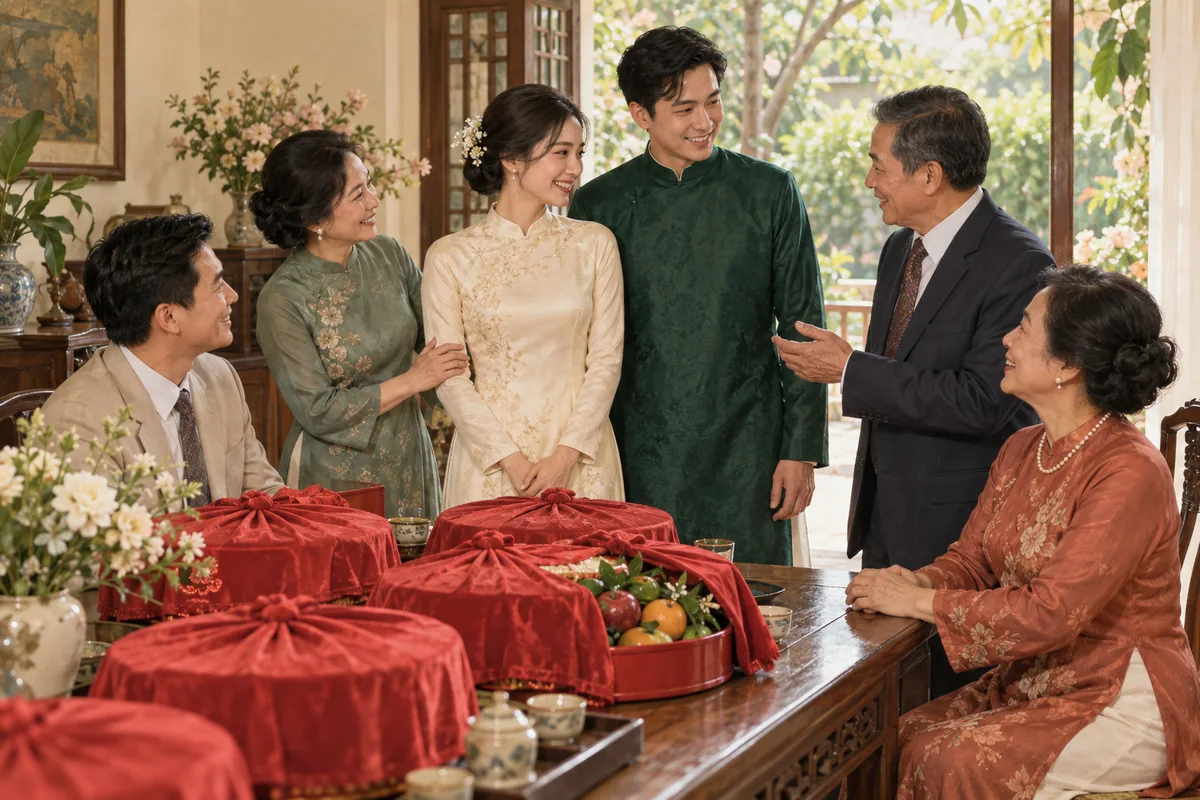
At the lễ ăn hỏi, the groom's family arrives at the bride's home carrying round red-covered trays (mâm quả) — betel leaves and areca nut, tea, wine, cakes, fruit, sometimes a roast pig — usually carried by an even, auspicious number of young unmarried people from each family. Betel and areca appear because of an old Vietnamese legend about loyalty between a husband, wife, and brother; the phrase "miếng trầu là đầu câu chuyện" (the betel quid begins the conversation) survives from that world.
On the wedding day, the couple typically pays respects at the family altar, is formally introduced to both families, and receives blessings and jewelry from elders. Many brides wear the áo dài — often red — for traditional portions and may change into a white gown for the reception.
Modern weddings compress this considerably, especially abroad. Catholic, Buddhist, and non-religious families all shape the day differently, and plenty of couples keep one traditional ceremony and skip the rest.