
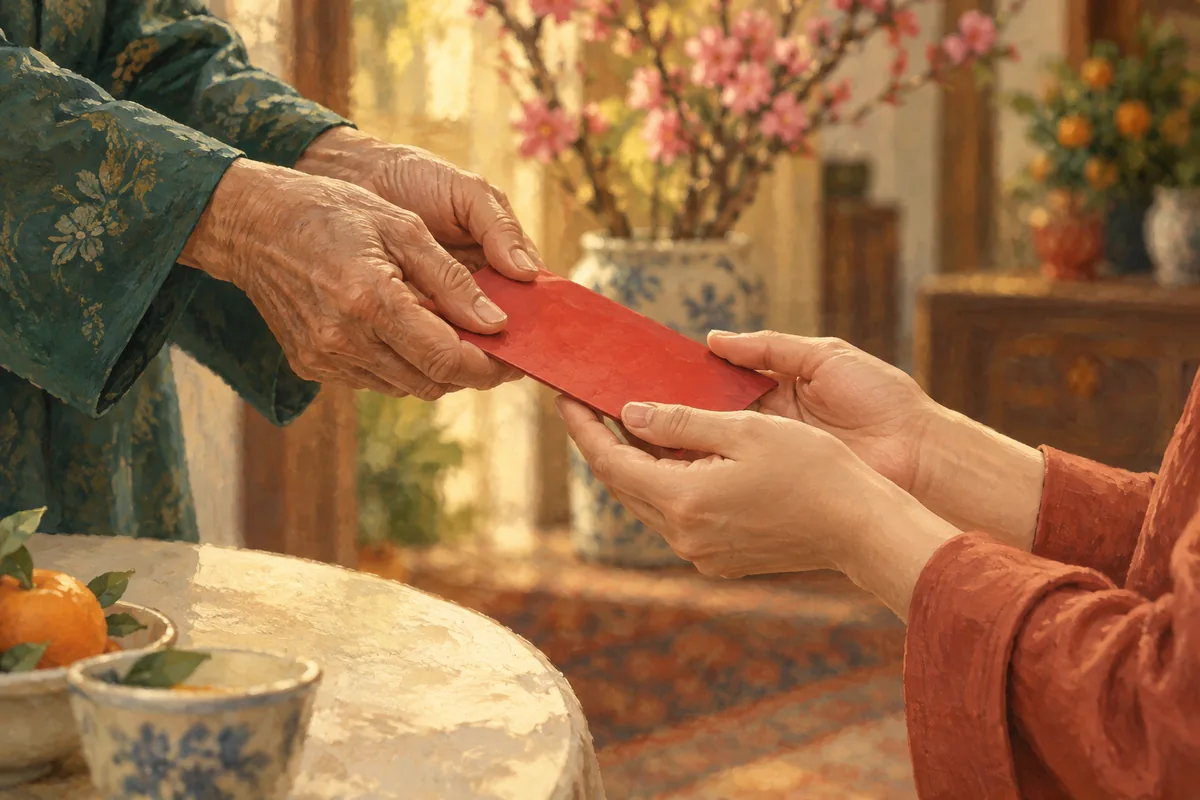
Lì xì are the small red envelopes containing money given during Tết. Red signifies luck and celebration, and the envelope matters as much as the amount — money is not handed over bare.
Traditionally the flow follows generation. Working adults give to children and to elders. Children receive with two hands and offer a New Year's wish in return: wishes for health and long life to grandparents, wishes for prosperity to adults. Many families expect a small performance — a rehearsed line, a bow, a smile — and it is a big part of what children remember.
The amount is usually modest and often deliberately auspicious. Crisp new bills are preferred, and many families avoid amounts they consider unlucky. In some households children hand their envelopes to their parents afterward; in others they keep them.
Lì xì also appears at weddings, birthdays, and other happy occasions in some families. Like most Tết customs, the details depend on region, generation, and household habit.