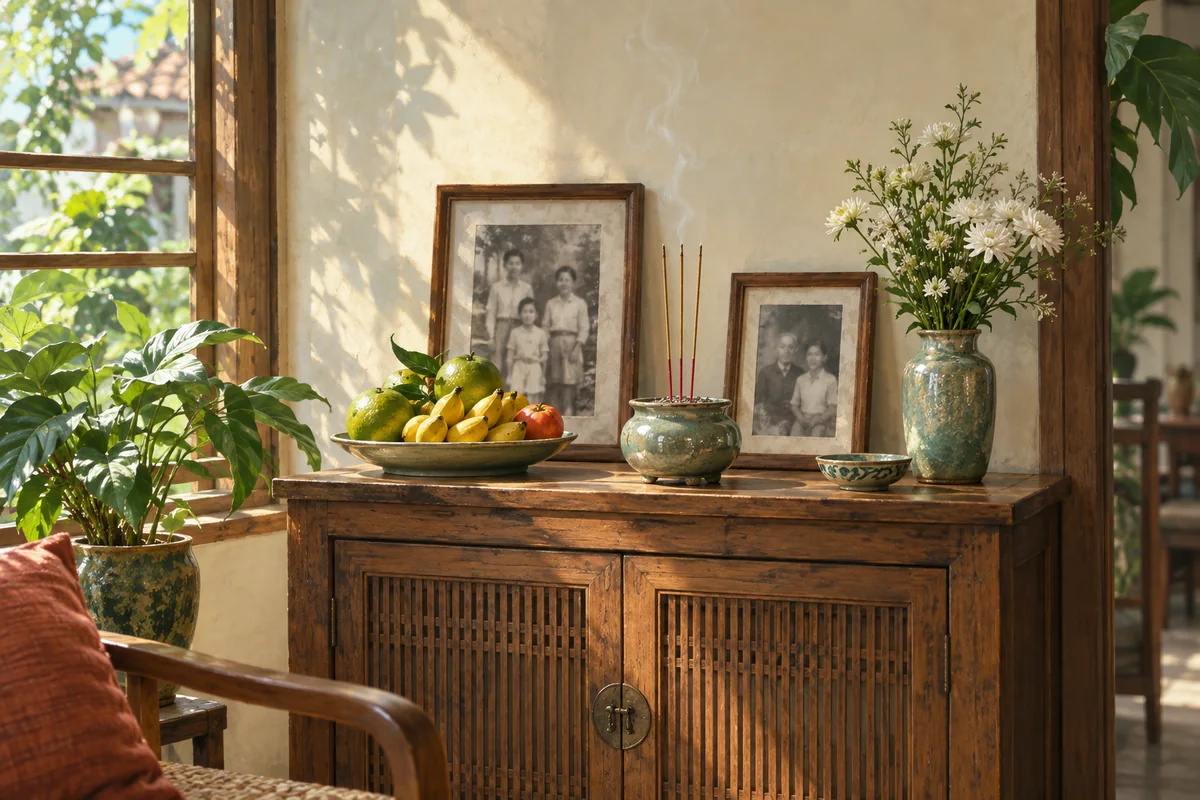
Many Vietnamese homes have a bàn thờ — an ancestral altar. It might be an elaborate carved cabinet or a single shelf with photographs. Typically it holds portraits of deceased family members, an incense burner, flowers, fruit, and sometimes tea, rice, or a favorite food of the person being remembered.
Ancestor veneration in Vietnam is often described as the country's most widespread practice, cutting across religion. It coexists with Buddhism, folk belief, and in many families with Catholicism, though Catholic families usually frame it as remembrance and prayer rather than offering.
The underlying idea is continuity: the people who came before are not gone from the family, and the family keeps a place for them. On death anniversaries (giỗ), at Tết, before weddings, before exams, or after a move, families light incense and speak to their ancestors — sometimes formally, sometimes as casually as talking to a grandparent.
Practices differ enormously. Some families keep daily incense. Some light it only on holidays. Some households have no altar at all. Religion, generation, and personal comfort all shape it, and there is no single required form.