Tết Nguyên Đán — usually just called Tết — is Lunar New Year, and it is by far the most important holiday in the Vietnamese calendar. It falls in late January or February, following the lunar calendar, and for many families it is New Year's, a national homecoming, and a family memorial season all at once.
The days before Tết are for preparation: cleaning the house thoroughly, settling debts, buying new clothes, cooking, and visiting graves. Many families invite ancestors home for the holiday. Flowering branches are central — hoa mai (yellow apricot blossom) in the south, hoa đào (pink peach blossom) in the north — along with kumquat trees.
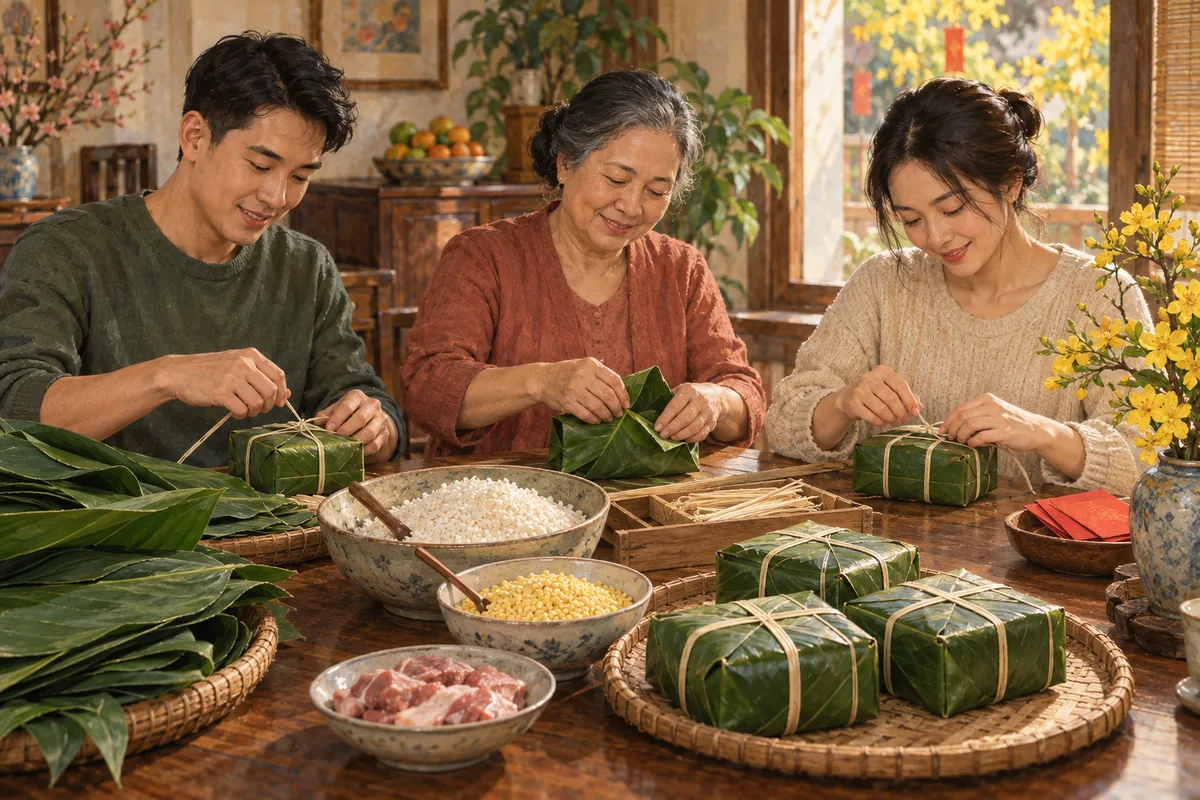
Food carries meaning: bánh chưng (square, northern) and bánh tét (cylindrical, southern) sticky rice cakes, candied fruits and seeds on a decorative tray, boiled chicken, pickled vegetables, and braised pork with eggs.
On the first day, families often stay together. There is a widespread belief about xông đất — that the first person to enter the home in the new year influences the year's luck — so households sometimes arrange who arrives first. Children and elders receive lì xì, red envelopes with money, along with wishes for health and luck. Many families avoid sweeping on the first day so as not to sweep out good fortune.
Practices vary by region, religion, and family. Some households observe every custom; some keep only the meal and the envelopes. Both are Tết.