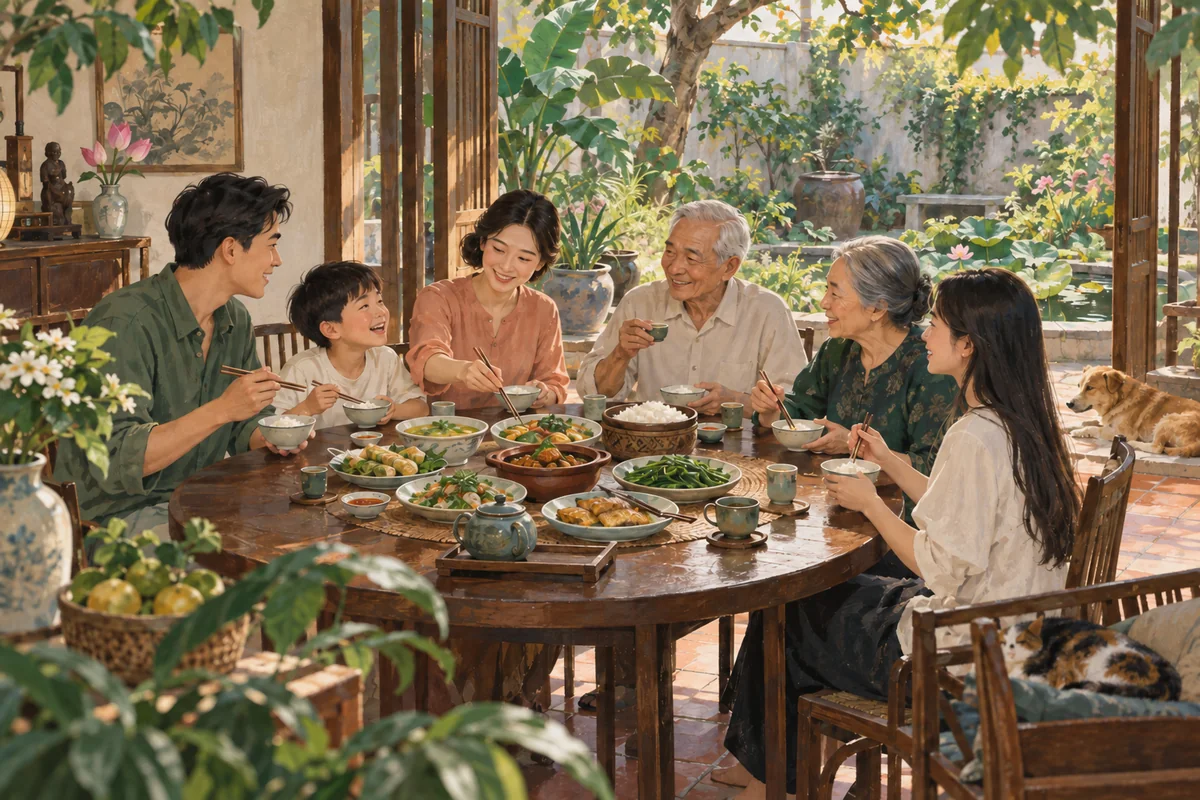
Vietnamese meals are usually built to be shared. A home dinner often means a pot of rice, a soup (canh), a stir-fried or braised dish, something salty and concentrated to eat with rice (món mặn), fresh herbs or pickled vegetables, and a communal dipping sauce. Everyone eats from the shared dishes into their own rice bowl.
Balance matters more than abundance. A well-composed table is expected to balance textures, temperatures, and flavors — salty, sweet, sour, bitter, and spicy — and to include something fresh and something soupy alongside something rich.
Table habits carry meaning too. Rice is often served to elders first. It is common to invite everyone at the table to eat before you begin — "Con mời ông bà ăn cơm" — naming each elder. Chopsticks stuck upright in a bowl of rice are avoided, because that shape resembles incense at an altar.
And food is how a great many Vietnamese families say things they may not say directly. Cutting fruit for someone, saving them the best piece, or asking whether they've eaten are all forms of affection with long histories behind them.