
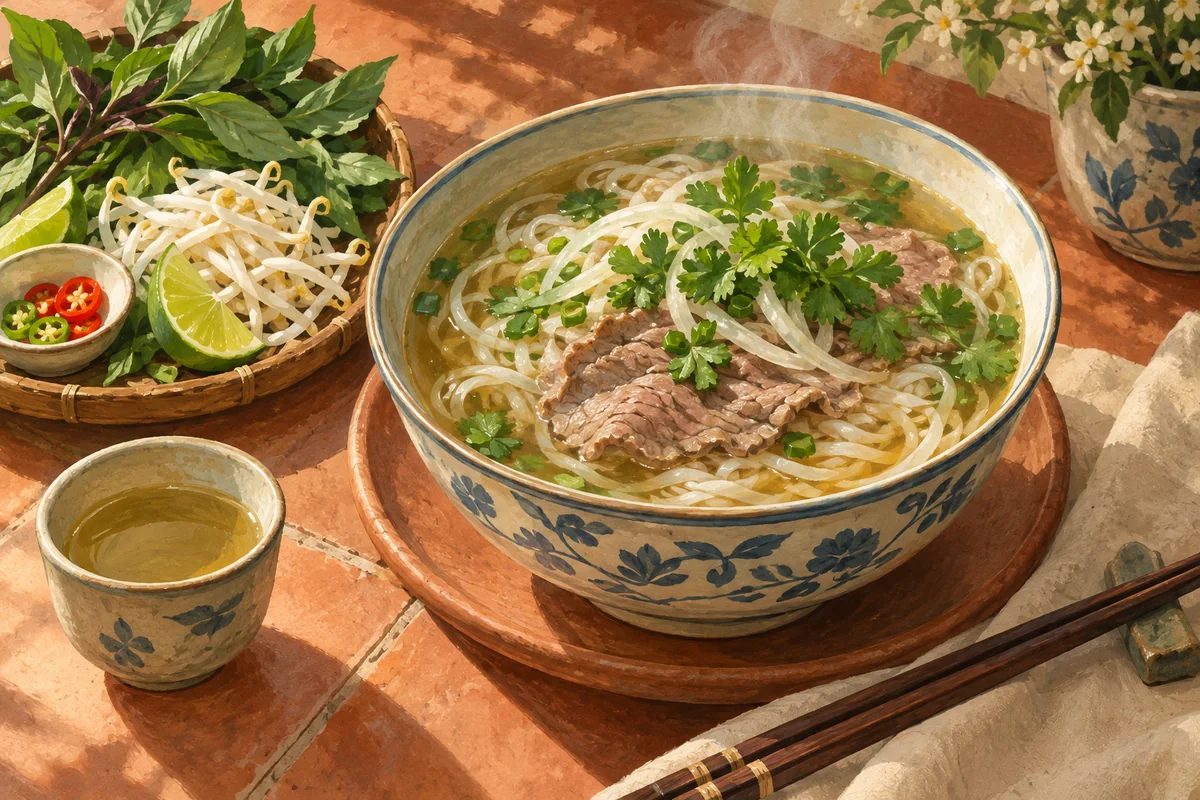
Phở is a rice-noodle soup built on a long-simmered broth — most traditionally beef (phở bò), also commonly chicken (phở gà). The broth is typically made with bones, charred ginger and onion, and warm spices such as star anise, cinnamon, cardamom, coriander seed, and clove.
It appears to have emerged in northern Vietnam in the early 20th century, in the area around Hanoi and Nam Định, during the French colonial period. Food historians generally point to a mix of influences: Vietnamese noodle traditions, Chinese noodle soups, and increased beef consumption connected to the French presence.
Phở then traveled south with the large migration following the 1954 partition of Vietnam, and it changed as it went. Northern phở is usually leaner and more focused on the broth, served with little more than green onion, maybe a squeeze of lime and a few chilies. Southern phở is often sweeter and richer, served with a plate of bean sprouts, Thai basil, lime, chili, and sauces on the side.
Because most early Vietnamese refugee communities in the United States came from the south, the southern style is the phở most Americans know — the version with the herb plate — and it is frequently eaten for breakfast in Vietnam.