
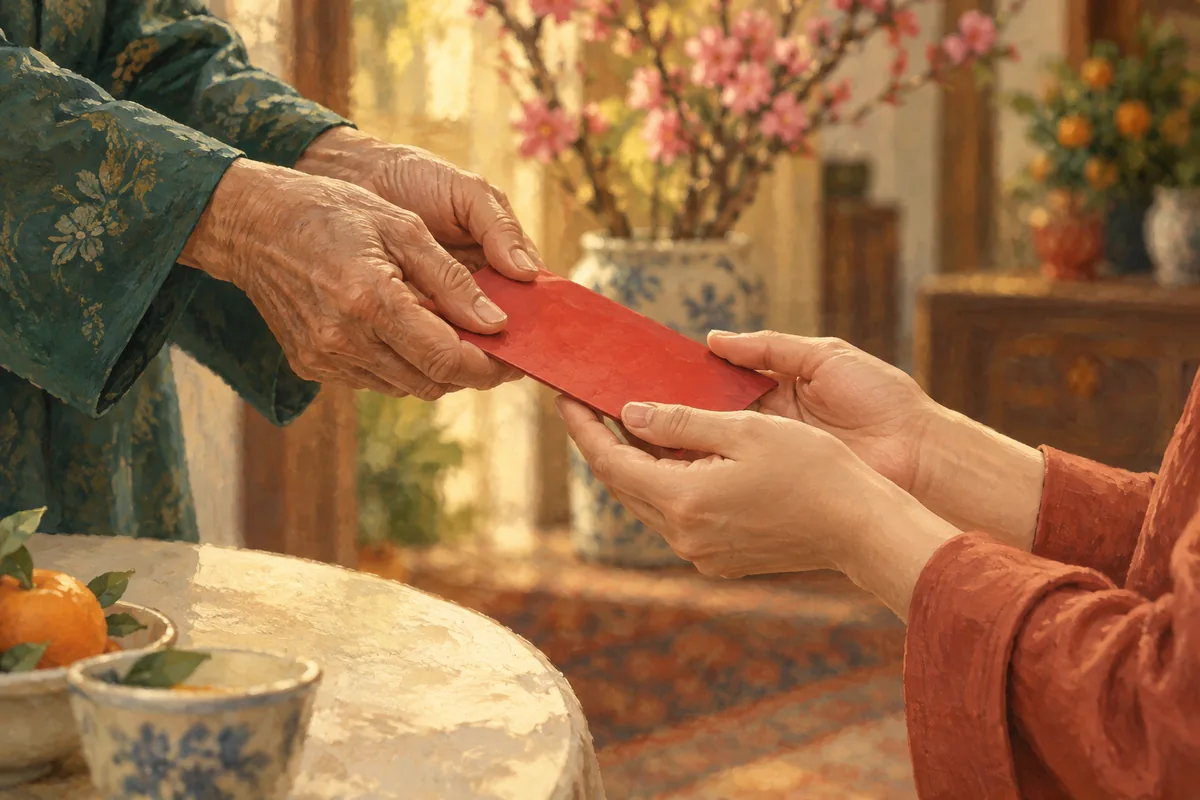
Because the envelope is a blessing, not a transaction. Red signals luck and celebration, and money given inside it is understood as passing good fortune and health from one generation to another — usually from working adults to children and to elders.
Lì xì (also called mừng tuổi in the north, roughly "congratulations on your age") is one of the most recognizable Tết customs. Adults hand children a red envelope; children respond with a New Year's wish appropriate to the person — long life and health for grandparents, prosperity for working adults.
Two details matter more than the amount. First, the money should be new, crisp bills — worn money is considered a poor vessel for a wish. Second, envelopes are given and received with two hands, and opening one in front of the giver is generally avoided.
Amounts are usually modest and often chosen for auspicious digits. The custom flows in both directions: adult children commonly give lì xì to their parents and grandparents as a gesture of gratitude, which surprises people who assume it only travels downward.
Details vary widely. Some families give only to children, some to everyone unmarried, some to elders too. Amounts, timing, and whether kids keep the money differ from household to household.