Vietnamese hospitality tends to be generous in a very specific way: it is expressed through feeding people, and it does not really take no for an answer.
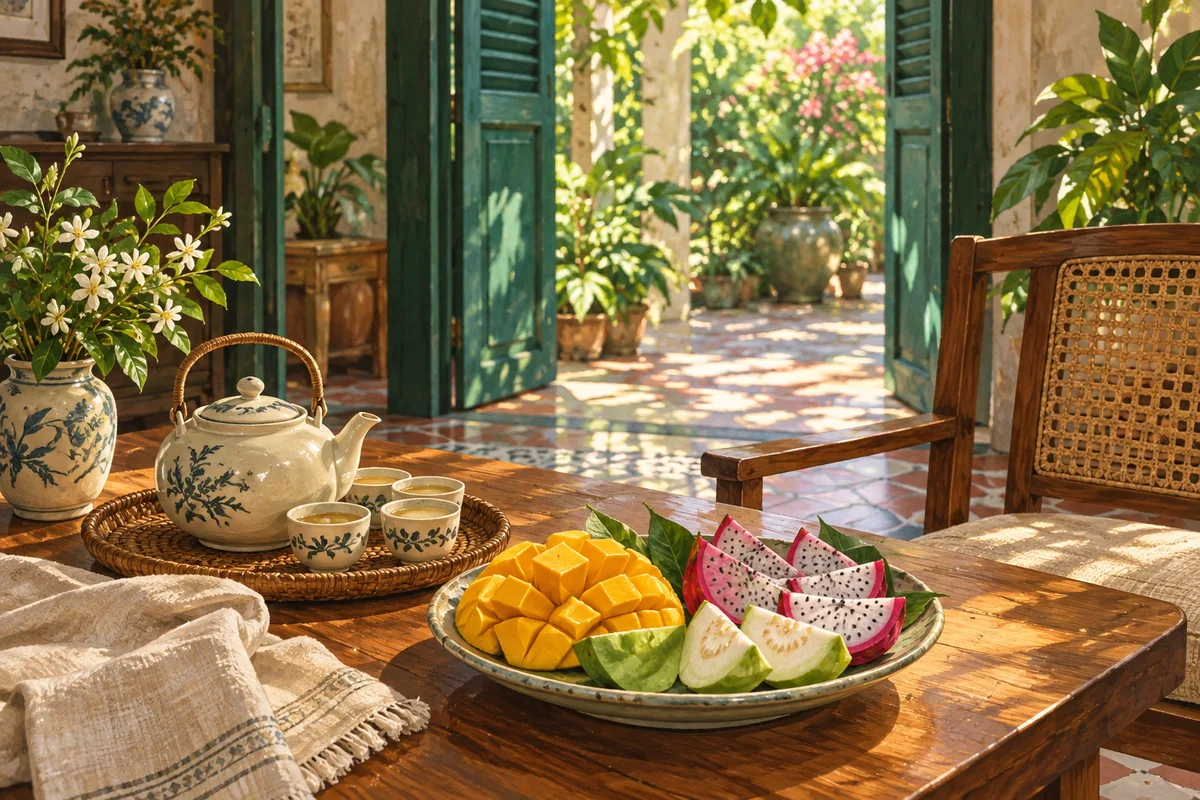
A guest who says they already ate will often be served anyway. A guest who finishes their bowl may find it refilled. Fruit gets cut and set out. Leftovers get packed for the road. Refusing food once or twice before accepting is common and is not considered rude — the offering and the polite refusal are both part of the exchange.
Hosts also frequently insist on paying. In many families, the oldest person at the table, or the person who invited everyone, considers the bill theirs. Splitting the check between generations can feel genuinely uncomfortable to an elder, even when the younger person can easily afford it.
If you are the guest, a few things are almost always welcome: bring fruit or a small gift, take your shoes off at the door unless told otherwise, greet the elders first, and eat something. If you are hosting a Vietnamese guest, expect them to bring more than you asked for.