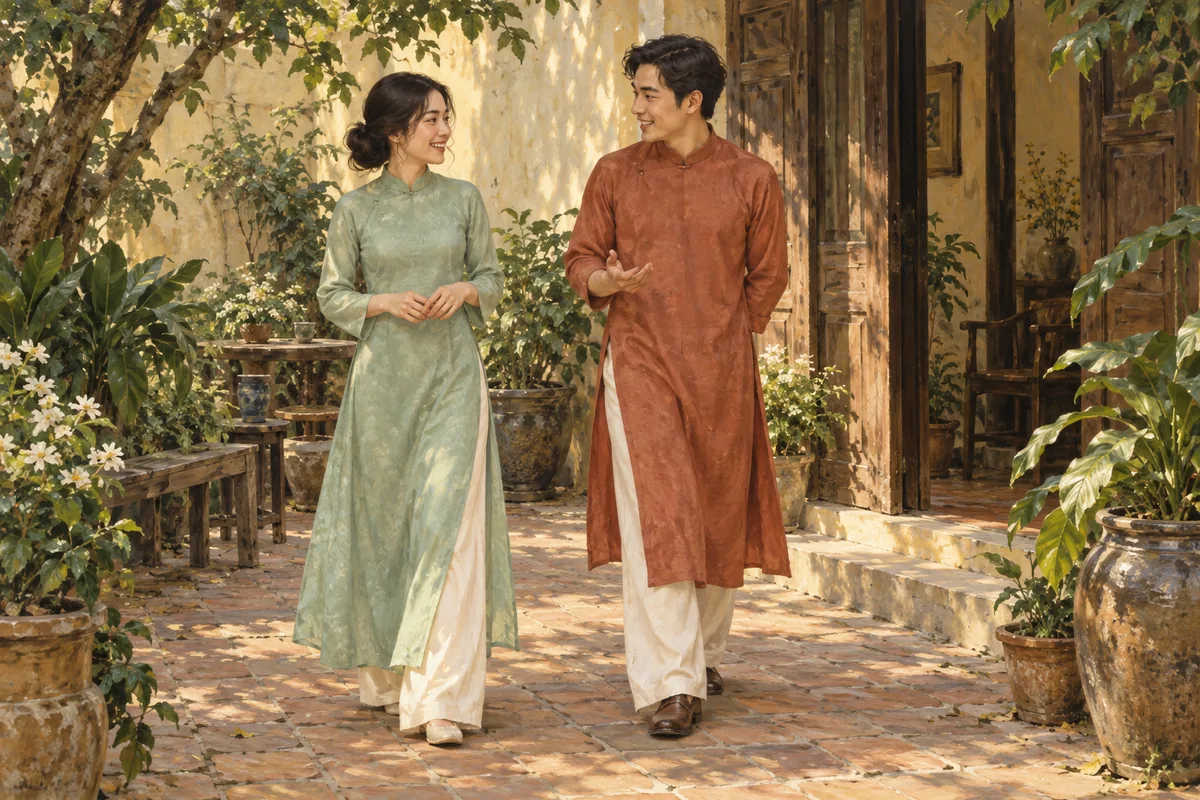
The áo dài is a long, fitted tunic worn over loose trousers — the garment most associated with Vietnamese dress today. Its modern form is surprisingly recent: the silhouette people recognize now was shaped in the 1930s by designers working in Hanoi, notably Cát Tường (Le Mur), who adapted older court and everyday clothing into a slimmer, more tailored line.
Earlier ancestors of the garment go back to the áo ngũ thân, a five-panel robe worn in the Nguyễn period, and further back to a long history of Vietnamese dress that was periodically reshaped by court decree.
Today the áo dài appears at Tết, weddings, graduations, festivals, and formal occasions. It is also worn by many students and by staff at some workplaces in Vietnam. Men's áo dài exists too, usually looser and often worn with a turban-style headpiece (khăn đóng) for ceremonies.
Color carries loose associations — red for weddings and celebration, white historically for students, pastels for spring — but these are conventions, not rules. Non-Vietnamese guests are commonly welcomed to wear áo dài at weddings and Tết events when invited to.