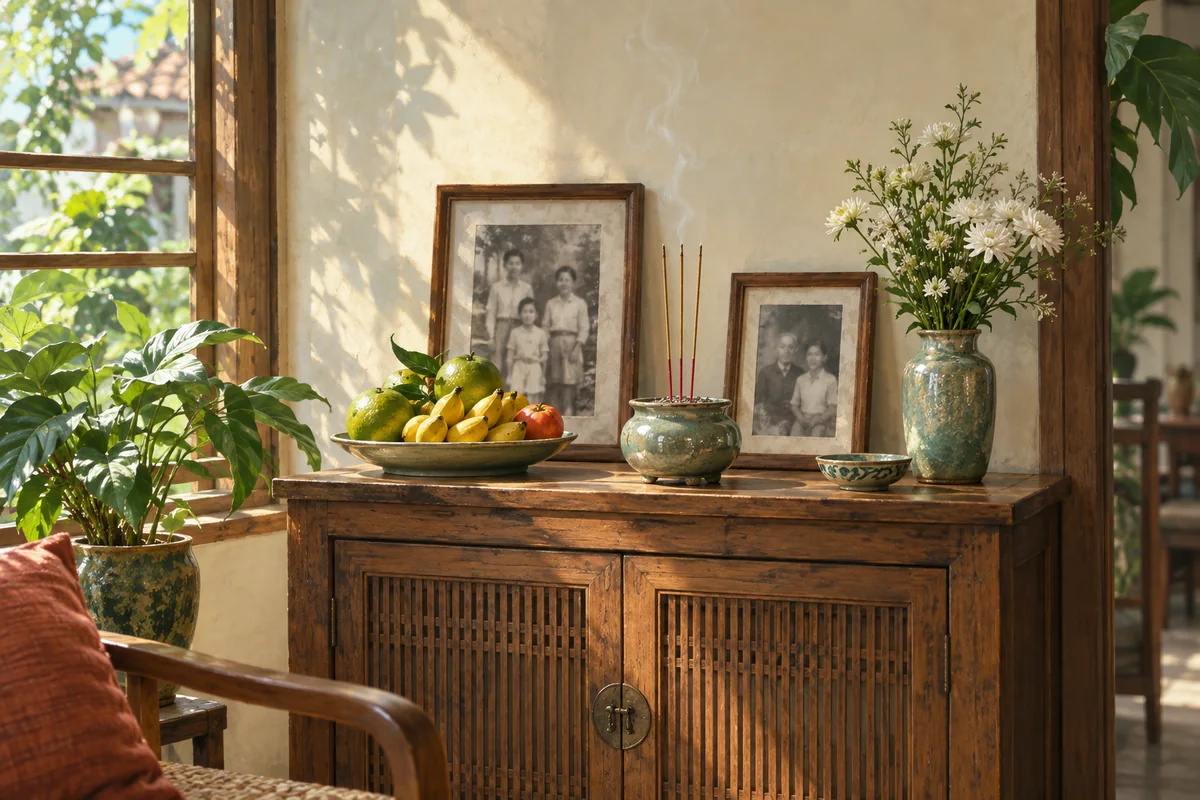
Incense is widely understood as a way of opening communication — the smoke rising carries words, respect, and remembrance upward. Lighting it marks the moment as intentional: you are stopping, standing still, and speaking to someone who is no longer here.
Incense (nhang in the south, hương in the north) appears at ancestral altars, temples, churches in some Vietnamese Catholic practice, graves, and shrines. It is lit at Tết, on death anniversaries, before weddings and exams, when someone moves into a new home, and often simply on the first and fifteenth of the lunar month.
Sticks are typically held with both hands at forehead level, bowed with, and then placed in the burner. The number of sticks carries meaning in some traditions — one, three, or five are common — though many families do not think about it consciously.
Part of what incense does is practical and human: it creates a pause. A family arriving from a long drive, arguing about parking, will stop at the altar, go quiet for thirty seconds, and reset. For children, the smell becomes permanently linked to grandparents' houses and holidays.
No. Practices differ by religion and household, and some families use electric altar lights or flowers instead of incense — for health, building rules, or preference.