
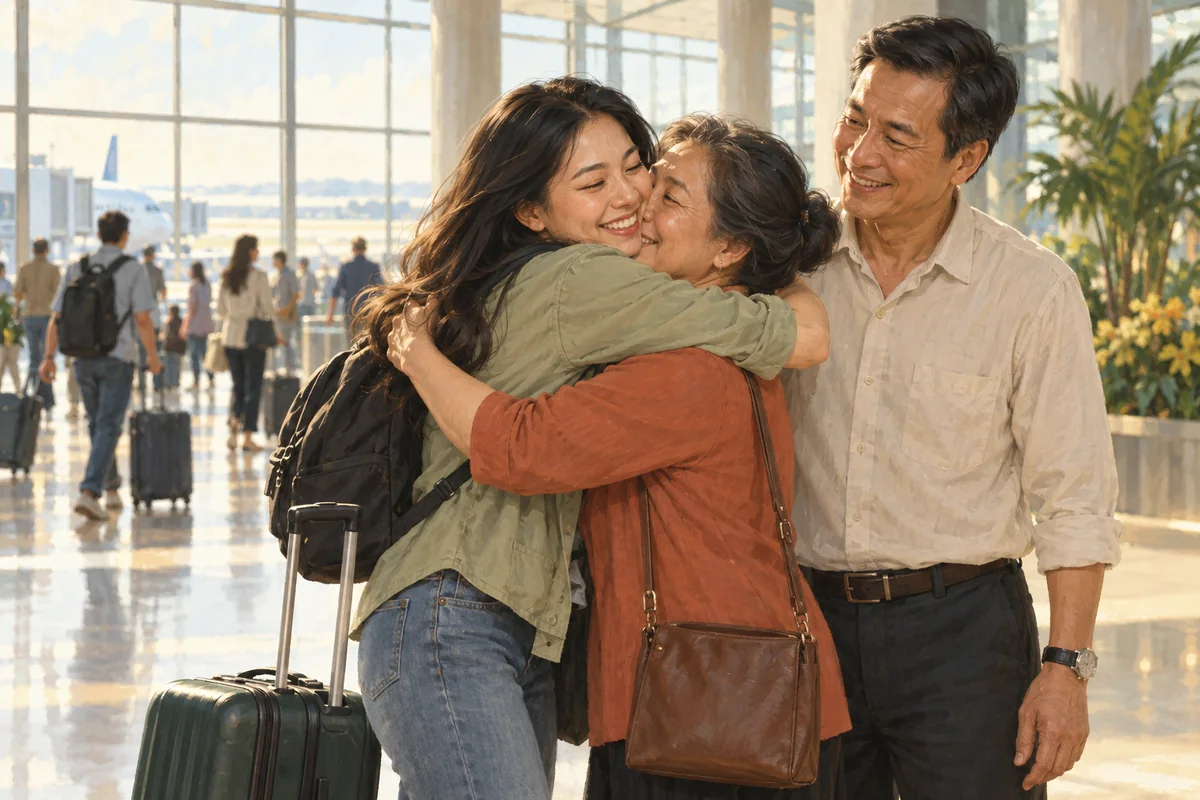
Because for many families the trip is not a vacation. It can be the first return since leaving under difficult circumstances, a visit to graves, a reunion with relatives who stayed, or a child's first look at the place their parents talk about but rarely explain.
Departures from Vietnam after 1975 were often abrupt, dangerous, and permanent-feeling. People left siblings, parents, houses, and unfinished lives. Returning decades later means encountering all of that at once — sometimes alongside relatives who experienced the intervening years completely differently.
There is also the gap between memory and reality. A parent may remember a neighborhood that no longer exists, a river that has been built over, a house occupied by strangers. Adult children frequently describe watching a parent go quiet on a street corner and understanding, for the first time, that their parent had an entire life before them.
For second and third generation visitors, the trip often produces a different feeling: being visibly Vietnamese and unmistakably foreign at the same time. Being asked where you're from and not having a short answer.
And there is often grief — for grandparents who died before a return was possible, for years of separation, for the version of the family that would have existed if nobody had left.
No. Some families return often and easily; some have never returned; some choose not to. Family history, politics, and personal comfort all shape it.