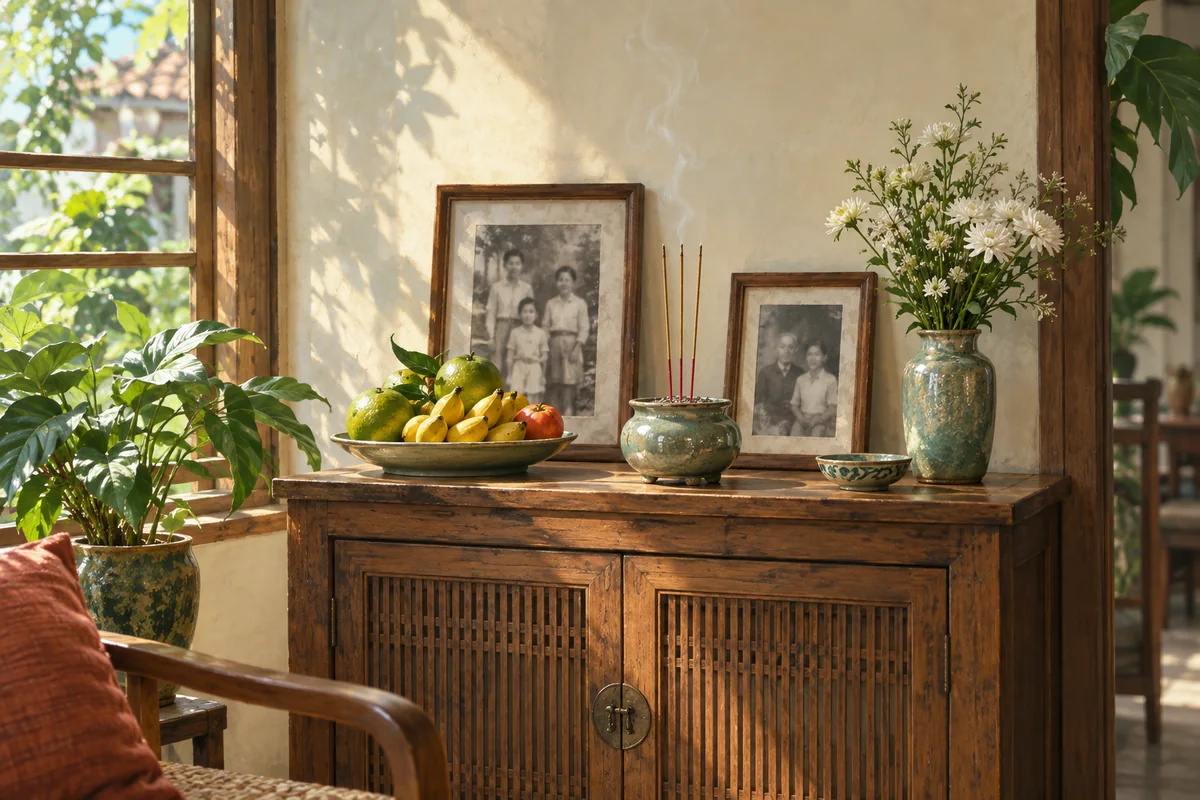
A <b>giỗ</b> is the annual observance of a family member’s death, and it functions less like a solemn memorial and more like a reunion held in that person’s honor. The family gathers, cooks the person’s favorite dishes, offers them at the altar, and then eats together.
Giỗ is typically calculated on the lunar calendar and organized by a designated branch of the family — often the eldest son's household, though this varies. Relatives travel for it, sometimes considerable distances, and in many families attendance matters as much as attendance at a wedding.
The meal is usually specific. Families cook what the person liked. Someone will say out loud that this was Ông's dish, or that Bà always made the pickled vegetables differently. Stories get retold. Children hear family history in the form of small arguments about how someone actually made the broth.
The offering is made first at the altar, incense is lit, and after it burns down the food is shared. The person is spoken about in the present tense more often than not.
For many Vietnamese Americans, giỗ is the day the family history actually gets transmitted — not through a formal telling, but through relatives talking over each other about someone they miss.
No. Frequency and formality differ widely by religion, region, and generation. Some families hold giỗ for several ancestors each year; some mark only parents and grandparents; some observe it as a memorial Mass instead.