Because in many Vietnamese families, feeding someone is the most reliable, least awkward way to say something emotional. Food does not require the vocabulary of feelings, it can be offered repeatedly without embarrassment, and it is unmistakably an act of effort.
The classic example, recognized by an enormous number of Vietnamese Americans, is the plate of cut fruit. Nobody announces it. A parent disappears, and a bowl of peeled, sliced mango or apple appears next to you while you are working. It is not a snack. It is an entire conversation.
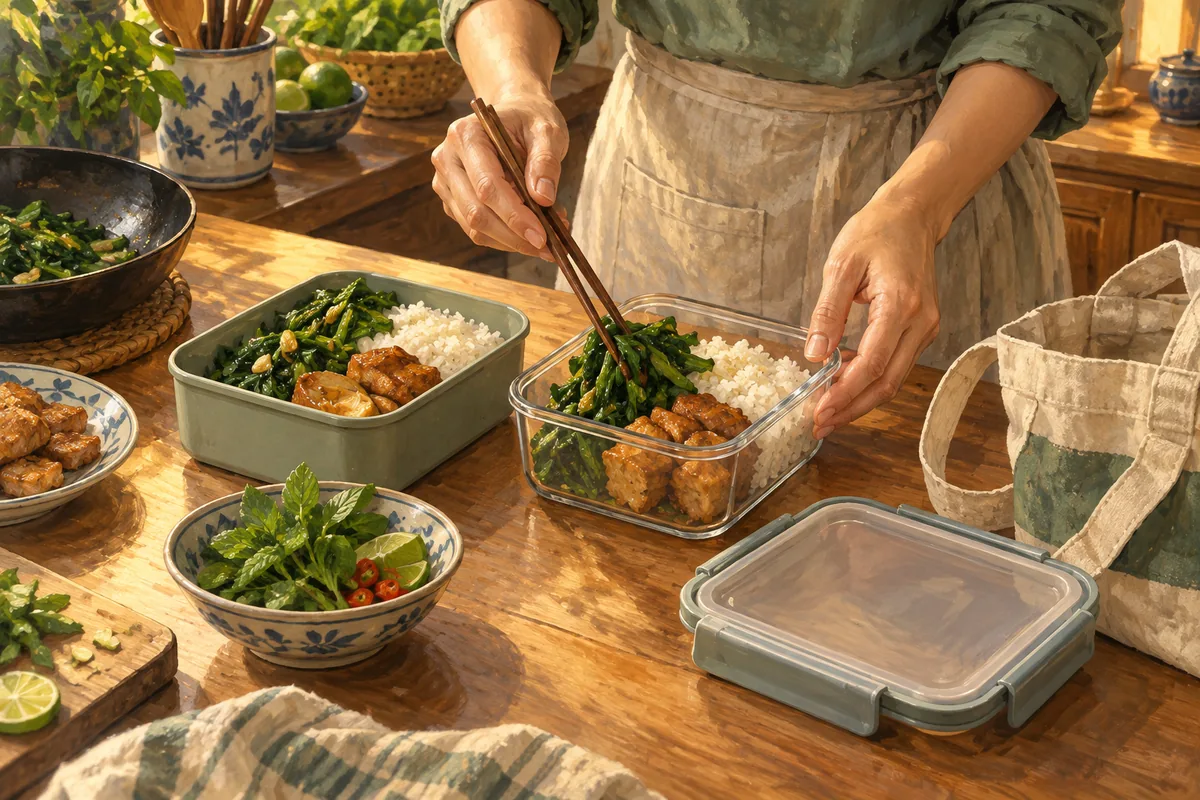
Other versions of the same message: giving you the best piece of fish, saving the last piece of something for you, sending you home with containers you did not ask for, making a specific dish because you mentioned liking it once six years ago.
Some of this is cultural inheritance — Confucian-influenced family roles emphasize provision and duty over declaration. Some of it is generational and situational: parents who came through war and displacement often built their emotional vocabulary around making sure people were fed and safe.
The gap this creates is real. A child raised with American emotional norms may want the words. A parent raised elsewhere may find the words uncomfortable and the fruit obvious.
Not every family, and not to the same degree — plenty of Vietnamese families are verbally affectionate too. But food-as-affection is one of the most commonly recognized patterns across the diaspora.