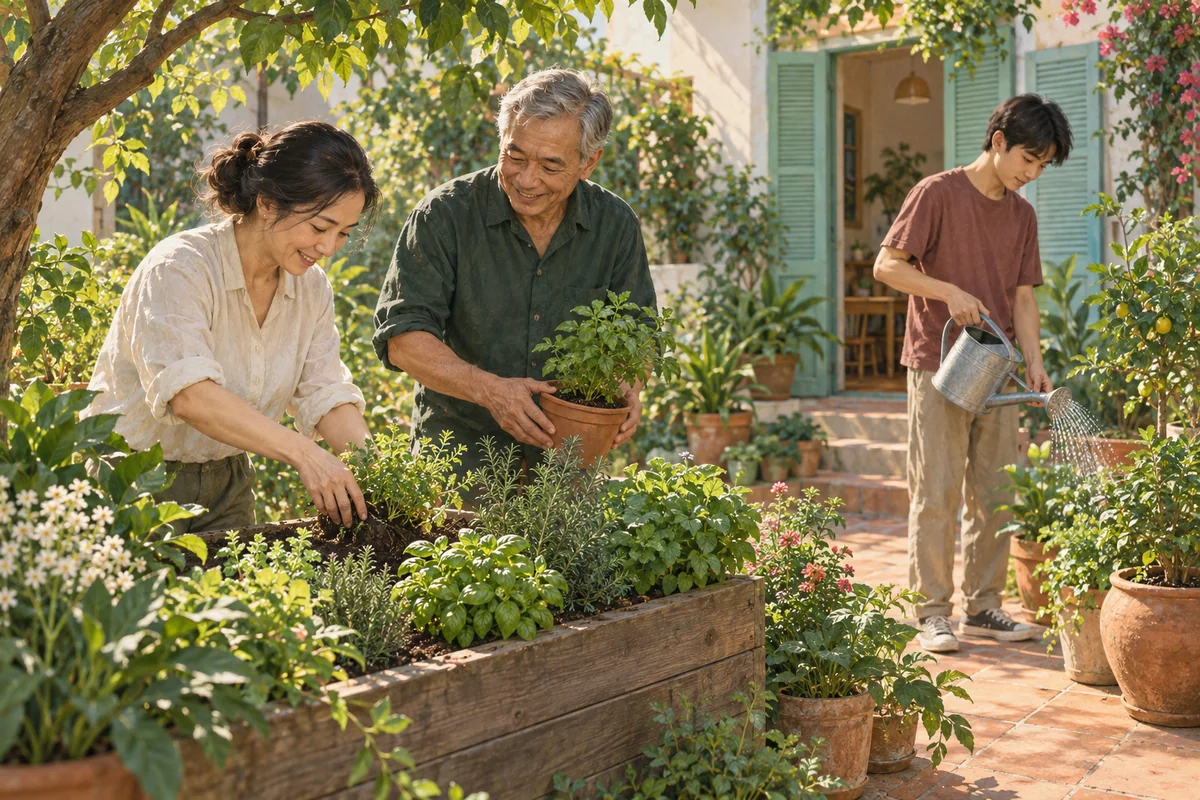
If there is one organizing idea that shows up across Vietnamese language, holidays, food, architecture, and everyday decisions, it is the family — not only the household you live in, but the extended web of grandparents, aunts, uncles, cousins, and ancestors who came before.
Traditionally, Vietnamese family life has been shaped by Confucian ideas that arrived and were reworked over centuries: respect flows toward age and generation, obligations run in both directions, and the family is treated as a continuing line rather than a set of individuals. The word often translated as filial piety, hiếu or hiếu thảo, describes care and gratitude toward parents and elders expressed in action.
In practice this can look like adult children living at home well into adulthood, sending money to parents, consulting family before major decisions, hosting relatives for weeks, or organizing a year around family gatherings. Many families also treat obligations to elders as something you simply do, not something you negotiate.
It is worth saying plainly: none of this is universal, and it is changing. Urban families in Vietnam, families abroad, younger generations, and families with different religious backgrounds all balance these expectations differently. Some experience them as deep security. Some experience them as pressure. Many feel both.