
Vietnamese history is usually told as beginning in the Red River Delta with the Hùng kings of Văn Lang, a semi-legendary early polity, followed by Âu Lạc under An Dương Vương, remembered along with the spiral citadel of Cổ Loa.
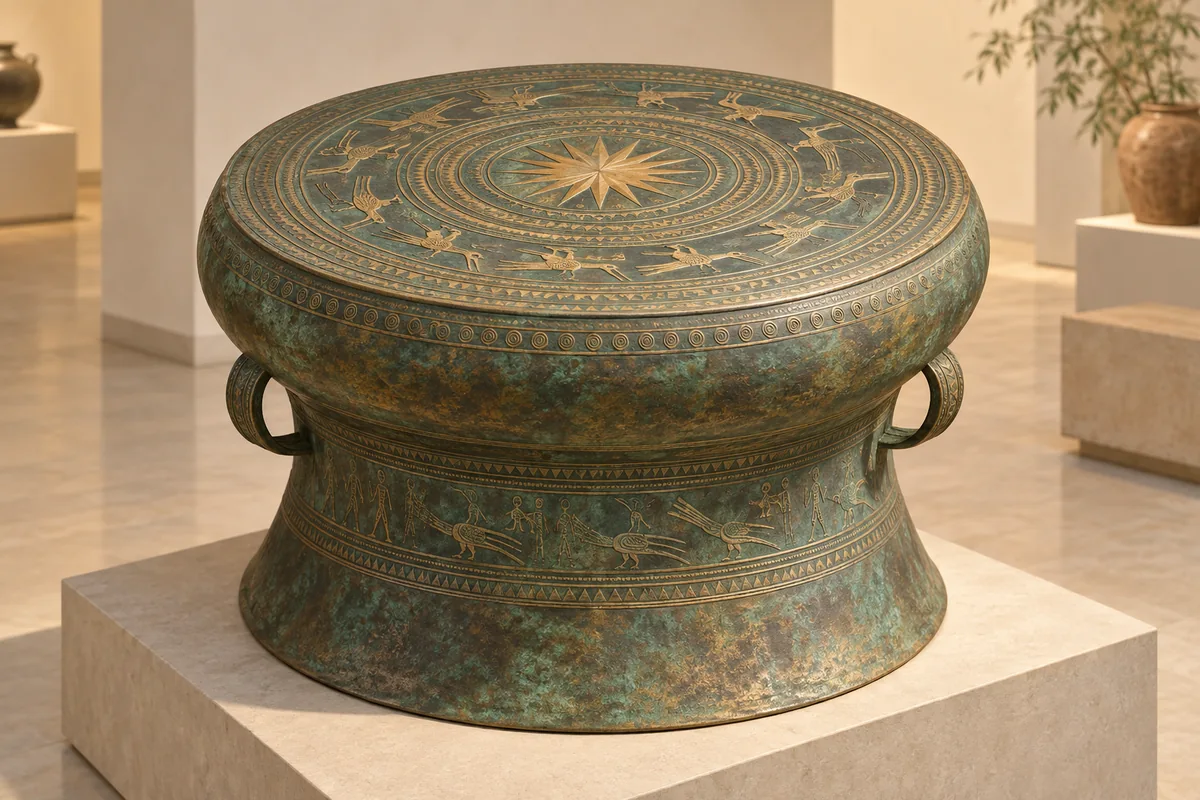
Archaeology gives a parallel picture: the Đông Sơn culture of the first millennium BCE, famous for enormous bronze drums decorated with concentric scenes of boats, birds, and dancers. Those drums remain one of the most recognizable symbols of ancient Vietnam.
From roughly 111 BCE, the region came under successive periods of Chinese imperial rule that lasted, with interruptions, for about a thousand years. This long era left deep marks — writing, administration, Confucian and Buddhist thought, vocabulary — while also producing a durable tradition of resistance.
The Trưng sisters (Hai Bà Trưng) led an uprising around 40 CE and are among the most honored figures in Vietnamese history; Bà Triệu led another in the 3rd century. Their memory is one reason so many Vietnamese streets, schools, and districts carry their names.