
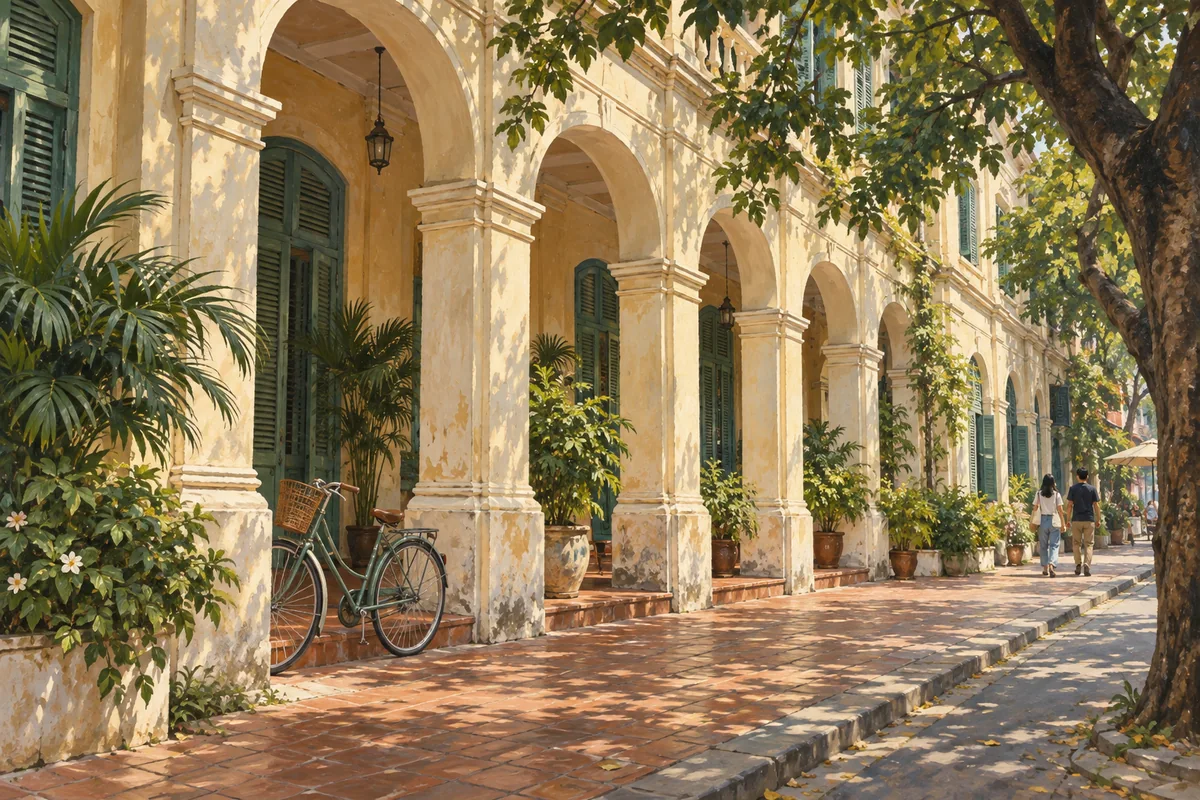
French involvement in Vietnam escalated from the late 1850s, and by the 1880s Vietnam had been divided administratively into three parts — Tonkin in the north, Annam in the center, and Cochinchina in the south — within French Indochina, alongside Cambodia and later Laos.
Colonial rule reorganized the economy around exports such as rice, rubber, and coal, and built railways, roads, and cities. It also brought heavy taxation, land concentration, forced labor on plantations, and a small colonial-educated elite alongside widespread rural poverty. Famine struck catastrophically in 1944–45 in the north.
Cultural change was equally profound. The Latin-based quốc ngữ script spread rapidly, newspapers and modern publishing emerged, Vietnamese literature and art shifted, and French words entered everyday Vietnamese — ga (station), xà phòng (soap), bơ (butter), cà phê (coffee). Bánh mì and Vietnamese coffee both emerged from this collision.
Resistance ran throughout the period, from scholar-led movements and Phan Bội Châu's overseas organizing to the Vietnamese Nationalist Party and the communist movement that formed in 1930. Vietnamese people experienced and remember this era very differently depending on family history, region, and politics.