Vietnamese music covers an enormous range, and for many families abroad it is one of the strongest emotional links to home.
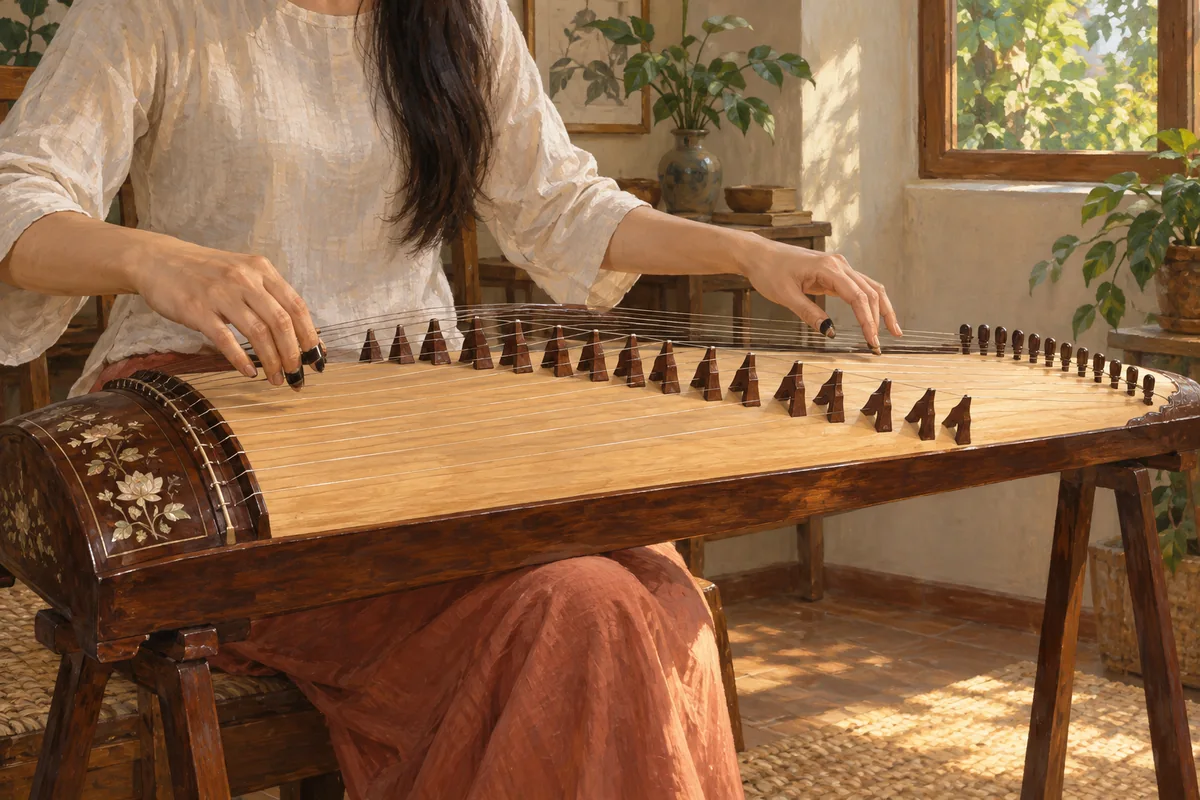
Traditional forms include ca trù, a northern chamber song tradition; quan họ, the call-and-response folk singing of Bắc Ninh; nhã nhạc, the refined court music of Huế; and hát chèo and hát tuồng, forms of sung theater. Instruments include the đàn bầu (a one-string instrument with a remarkable bending tone), đàn tranh (zither), đàn nguyệt (moon lute), and sáo (bamboo flute).
In the south, đờn ca tài tử chamber music grew into cải lương — reformed opera — which blended folk melody, spoken drama, and modern staging and became hugely popular in the 20th century.
The 20th century also produced nhạc vàng ("golden music"), the bolero-influenced ballad tradition strongly associated with pre-1975 southern Vietnam, and nhạc tiền chiến, the romantic songs of the pre-war era. Trịnh Công Sơn's songwriting sits in its own category for many listeners. Overseas, Vietnamese-American variety productions kept much of this repertoire alive for decades.
Today Vietnam has a fast-moving pop, indie, hip-hop, and V-pop scene, and younger artists increasingly fold traditional instruments and folk melodies back into contemporary production.