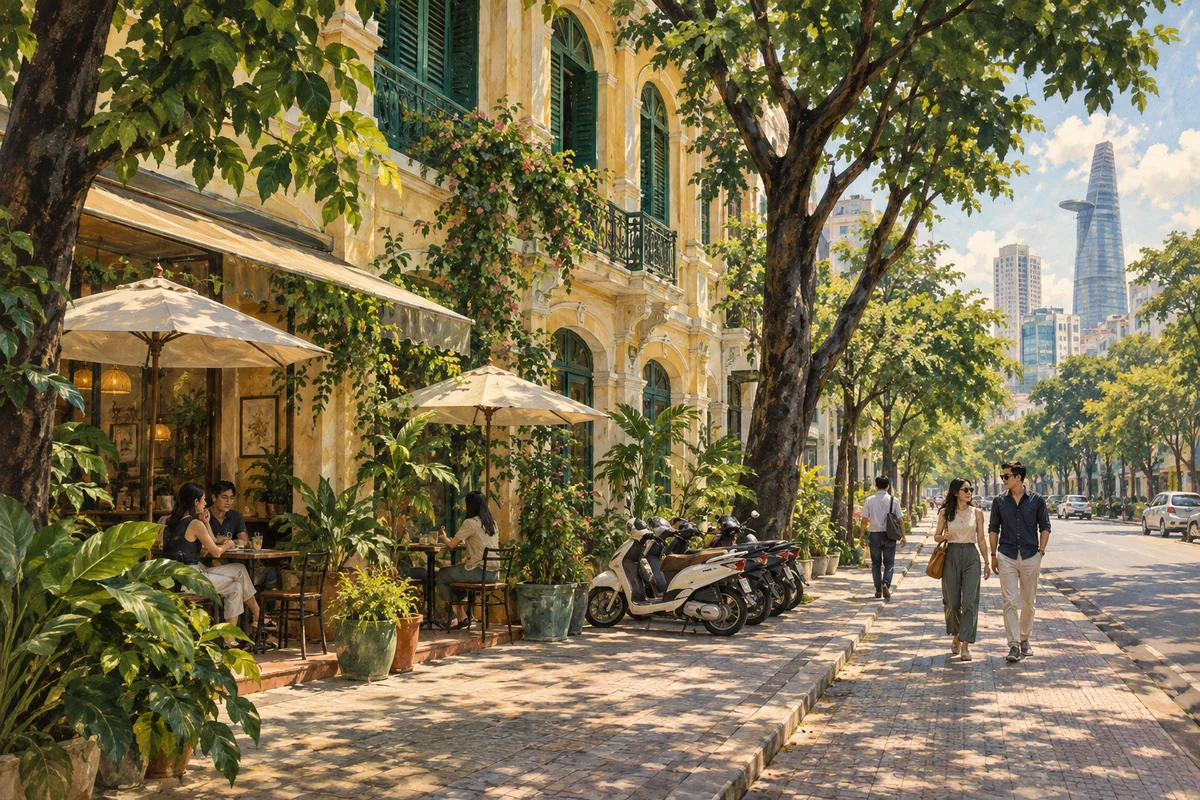
Vietnam today is young, urbanizing quickly, and deeply online. Hanoi and Hồ Chí Minh City anchor a country where a large share of the population was born after the economic reforms of the late 1980s and has no direct memory of the war years.
Those reforms, known as Đổi Mới and launched in 1986, shifted Vietnam toward a market-oriented economy while retaining single-party governance. The decades since brought rapid growth, large-scale manufacturing, a substantial reduction in poverty, and heavy investment in infrastructure and education.
Contemporary Vietnamese culture is highly visible abroad: Vietnamese coffee culture, street food, fashion, film, and music travel widely, and Vietnamese social media is enormously active. At the same time the country faces real pressures — climate risk in the Mekong Delta, air quality in major cities, rural-to-urban migration, and an aging population on the horizon.
For people abroad, it is worth knowing that Vietnam is not preserved in the year a family left it. Returning visitors frequently describe the gap between the country they remember and the country that exists now as one of the most disorienting parts of going back.